Audioquest Dragon XLR Interconnect
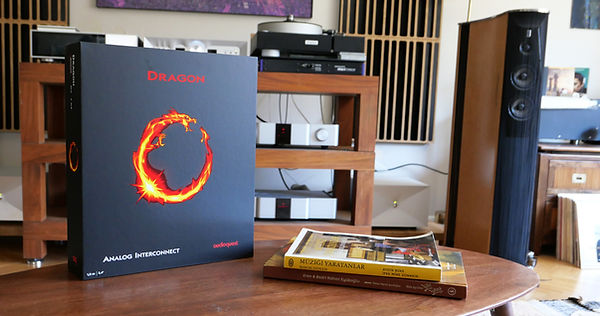
Audioquest Dragon XLR Interconnect
Today, in the world of Hi-Fi, certain brands become associated with specific products. Some manufacturers are known for their loudspeakers, others for their amplifiers or turntables. AudioQuest, however, has focused for nearly half a century on an invisible yet extremely critical area of audio systems; Signal transmission and noise control.
Founded in the late 1970s, AudioQuest is today regarded as one of the world's largest and most recognized cable manufacturers.
AudioQuest was founded in California by Bill Low. At that time, the prevailing view in the audio world was that cables were merely passive components that carried electricity from one point to another. AudioQuest’s approach, however, was very different from the very beginning. The company’s fundamental thesis was based on the idea that a cable in an audio system is not merely a conductor, but also an active element that affects signal integrity, noise levels, and timing accuracy.
By the 1990s, AudioQuest had evolved beyond being merely a cable manufacturer and had become an engineering company conducting extensive research into conductor metallurgy and insulation technologies. During this period, the development of Perfect Surface Copper (PSC) and later Perfect Surface Silver (PSS) technologies became some of the company’s most important milestones. Through these R&D efforts, it became apparent that microscopic irregularities on the conductor surface could cause various forms of degradation during signal transmission, and that surface quality was at least as important as conductor purity.
In the 2000s, the company focused on one of the most important problems facing the Hi-Fi industry in a changing world: noise caused by electromagnetic and radio frequencies. In modern living environments today, Wi-Fi networks, mobile phones, switching power supplies, LED lighting, and countless digital devices continuously generate RF energy. AudioQuest engineers evaluated that this noise could affect not only digital systems but also analog signal paths, and began developing various noise-reduction solutions.
Before describing the first impressions after connecting the AudioQuest Dragon XLR Interconnect cable to your system, it is highly beneficial to understand the technologies and R&D efforts developed by the brand.
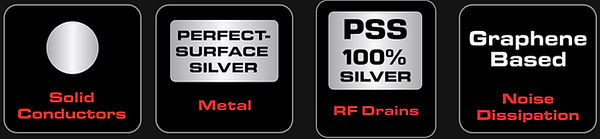
Solid Conductors
The conductors used in AudioQuest cables are of a solid-core design. In other words, a single-piece conductor approach is preferred instead of a multi-stranded construction.
In stranded constructions, there are constant mechanical contact points and microscopic oxidation points between the individual strands. Each contact point is a small impedance variation. Oxidized points disrupt electron flow in a non-linear manner. This mechanism, referred to as strand interaction, is the largest source of cable distortion.
A Solid-Core conductor eliminates these contact points. Electron flow occurs through a more continuous conductive path, independent of the strand-to-strand contacts found in stranded constructions.
Using a cable architecture with a solid, single-conductor material improves transient definition, increases micro-detail retrieval, and contributes to the formation of a more distinct stereo image.
The point that must be noted here is that a solid-core design does not create miracles on its own. If the conductor surface has not been properly processed, if incorrect geometry has been used, or if dielectric behavior has not been properly controlled, the result can be hard, mechanical, or excessively bright.
Another concept that must be understood when examining Solid-Core cables is Skin Effect.
When alternating current passes through a conductor, electrons do not distribute themselves evenly across the entire cross-section of the conductor. As frequency increases, current begins to move from the center of the conductor toward the outer surface. This phenomenon is known in electrical engineering as the Skin Effect.
With direct current (DC), current flows through the entire cross-section of the conductor, whereas with alternating current (AC), the central region of the conductor becomes progressively less utilized as frequency increases. As frequency rises, current density shifts from the center of the conductor toward the outer surface. As a result, an increasingly larger portion of the signal energy is carried by the outer layers of the conductor.
However, the issue is not limited to the audio band alone. In modern audio systems, RF noise, Wi-Fi signals, GSM frequencies, Bluetooth transmissions, and the high-frequency interference generated by power supplies also follow this path, and skin effect becomes much more pronounced.

With all of this information in mind, let us examine Perfect Surface Silver technology. Perfect Surface Silver is AudioQuest’s highest-level conductor material.
Two elements are important here:
The first is the silver itself, and the second is the way the conductor surface is processed.
Silver has the highest electrical conductivity of any metal at room temperature. Therefore, from a theoretical standpoint, it offers lower resistance than copper. However, AudioQuest’s PSS approach cannot be reduced to the claim that “silver conducts better than copper.” The company’s primary emphasis is on the smoothness of the conductor surface and the continuity of the metal’s internal structure.
In its Perfect-Surface technology, AudioQuest begins with extremely high-purity silver (or copper) as the starting material. The metal is first melted and cast into a mold to form a raw conductor billet. This billet is then drawn through steel dies to reduce it to the desired diameter — a process known as drawing. Each drawing operation reorganizes the crystal structure of the metal.
In a standard manufacturing process, the procedure ends at this stage. AudioQuest, however, combines the drawing and annealing processes through a special method. Annealing is a process in which the metal is softened under heat and relieved of internal stresses. By combining these two stages, the company produces an unusually soft silver conductor and, most importantly, an extraordinarily smooth and contamination-free surface.
This is precisely where AudioQuest’s Perfect Surface Silver approach becomes significant. PSS does not use silver solely for brightness or high-frequency extension. The goal is lower distortion and higher resolution.
Zero Tech
One of the most important engineering approaches used in AudioQuest’s Dragon series is called ZERO-Tech.
ZERO-Tech is concerned not only with the metal used or the purity of the conductor, but directly with the cable’s electrical behavior. In the Hi-Fi world, a cable is not merely a passive connection component that carries electricity. The cable’s geometry, dielectric structure, and electrical characteristics directly affect the signal’s behavior in the time domain, its energy storage properties, and phase integrity.
In the Hi-Fi world, cables are often thought of simply as “conductive wire.” From an electrical engineering perspective, however, a cable is a much more complex structure. It possesses Resistance, Inductance, and Capacitance characteristics. This is particularly important in speaker cables.
To understand ZERO-Tech, one must first understand the concept of “characteristic impedance.” Every cable of a given length has a natural impedance value. This is called Characteristic Impedance. It is generally represented by the symbol Z₀. The diameter and length of the conductor used in the cable, the cable geometry, and the dielectric insulation material used all directly affect characteristic impedance.
In digital systems, this standard is extremely important because when an impedance mismatch occurs, a portion of the signal can be reflected back. This phenomenon is called Reflection. The world standard is 110 ohms for AES-EBU and 75 ohms for S-PDIF cables.
In analog cables, however, the input and output impedances of the connected devices differ from one another. When the characteristic impedance value is reduced, the cable’s energy storage and therefore impedance fluctuation are reduced, phase consistency improves, the signal exhibits more linear behavior, and most importantly, timing-related distortions are significantly reduced. This is extremely important with regard to transients.

72V DBS
72V DBS
Before discussing this subject, it is useful to understand the dielectric insulation materials used in Hi-Fi cables.
Around the conductor in a cable are electrically insulating materials such as air, Teflon, polyethylene, and foam-based insulation materials. These materials are called dielectrics.
The important point here is that a dielectric material does not conduct electricity, but it does affect the behavior of the electric field.
As the signal travels through the metal conductor in a cable, it creates a constantly changing electromagnetic field around the conductor. This field interacts directly with the dielectric material. As current passes through the conductor, the dielectric material also responds to this interaction. As a result of this interaction, the dielectric material temporarily stores energy and then releases it with a delay.
This phenomenon is called Dielectric Absorption.
At this point, it is useful to explain the technical basis of the burn-in process in cables. When a signal passes through a cable, the insulating material surrounding the conductor is exposed to an electric field. This exposure partially affects the molecular structure of the insulation and, over time, the dielectric structure becomes charged. The dielectric material partially charges, temporarily stores energy, and then releases it again. This causes the signal to continuously expend energy dealing with this behavior, and timing is affected. This is the fundamental issue observed in cables that have not undergone a burn-in process.
With long-term use, the insulation becomes charged in a more uniform manner. It exhibits a more predictable and linear response to signal transmission. This process is called Formation. Over time, the cable adapts and sound quality improves.
So what happens if you apply a constant DC voltage to the dielectric structure surrounding the cable using 72V DBS?
Instead of behaving as a structure that stores and releases energy, the dielectric structure reaches a stable state in a very short period of time. It no longer steals energy from the conductor structure. Timing, and therefore transients, improve significantly, and micro-details emerge.

Graphene-Based Noise Dissipation
As of the 2020s, the electromagnetic environment in which we live is far removed from that of the 1980s, when cables were first designed.
Wi-Fi 6 and 6E (6 GHz band), 5G millimeter-wave frequencies, Bluetooth LE, smart home devices, LED lighting dimmers, and solar panel inverters. All of these are sources that emit broadband RF energy.
Within this energy environment, a cable inevitably behaves like an antenna. It receives RF signals and transfers them into the conductor network.
The problem is not that RF is heard directly. Audio frequencies exist between 20 Hz and 20 kHz. A signal in the GHz range does not reach the ear directly. The real problem is the masking effect.
RF noise mixes into the signal path and causes low-level information to become inaudible. The noise floor rises, resolution decreases, and dynamic range narrows.
AudioQuest’s approach to this issue has not been to rely solely on conventional shielding structures, but rather to absorb, dissipate, and control RF energy in a deliberate manner. To achieve this, the company employs multi-layer carbon-based and graphene-based structures.

FEP-Air Tubes Insulation
The first material that stands out here is graphene. Consisting of single-atom-thick layers of carbon, graphene helps reduce the non-linear behavior of RF energy, assists in the controlled dissipation of high-frequency interference, and helps move noise energy away from the signal path.
In particular, the Dragon series uses carbon-based noise dissipation systems. The purpose of these carbon-based structures can be summarized as creating controlled low-impedance paths for RF energy, reducing the random movement of high-frequency noise, and preventing noise energy from re-entering the signal path.
In a cable, not only the quality of the conductor material is important, but also the way the insulation material surrounding the conductor interacts with the electric field. The insulation materials surrounding the conductors are in constant interaction with the electromagnetic field generated by the signal.
The best dielectric structure is to use as small amount of dielectric material as possible.
This is precisely the starting point of FEP Air-Tube technology. The value that indicates how much electrical field energy an insulating material can store is called the Dielectric Constant.
The dielectric constant of polyethylene is 2.2, Teflon is 2.0, and air is 1.0006.
According to AudioQuest, the ideal dielectric material is air. The reason is that air has a dielectric constant of approximately 1 and an extremely low tendency to store electrical field energy.
In the Air-Tube architecture used in the Dragon XLR, the conductors are positioned inside special tubes that are largely surrounded by air rather than being embedded directly within a solid insulation material. As a result, a significant portion of the electromagnetic field generated by the signal propagates through air, while contact with solid dielectric materials that have a greater tendency to store energy is minimized.
Direction Controlled Conductors
Alternating current continuously changes direction, and theoretically a cable should exhibit the same behavior in both directions.
The system is based not on the direction of the music signal, but rather on the behavior of high-frequency noise traveling within the conductor and shielding structure.
According to the company, microscopic directional characteristics can be formed in conductors during the drawing and manufacturing processes, and these characteristics can influence the movement of RF noise within the cable.
Although the concept of Direction-Controlled Conductors is often associated with the orientation of the crystal structure within the conductor, AudioQuest’s current engineering approach places its primary emphasis on the control of RF noise.
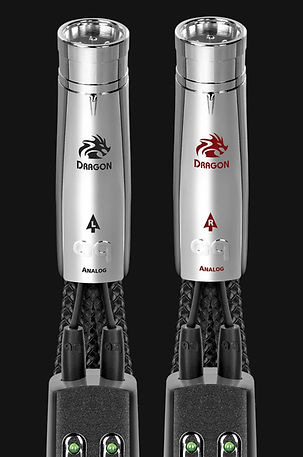
According to the company, conductors, shielding layers, and drain conductors are tested in a specific direction to determine the orientation that produces the lowest level of RF noise. In other words, the arrow marked on the cable indicates the direction in which the drain wire and shielding structure can dissipate RF energy most efficiently.
The goal is therefore not to give direction to the music signal, but to allow high-frequency noise to move through the system in a more controlled manner.

During the listening sessions, I first positioned the Dragon XLR Interconnect cable between the Karan KA Ph Reference Phono Stage and the Thrax Dionysos Preamplifier. The Karan features a solid-state topology, offers the user a great deal of adjustment flexibility, and is a very serious phono stage. Conducting the listening sessions with recordings whose characteristics and details I know extremely well meant placing the Dragon XLR into a genuine and demanding arena.
If I had to describe what I heard with the very first notes in three words;
Authority, Dynamism, and Resolution.
With large orchestral recordings that you have listened to countless times, you find yourself feeling as though the same orchestra is being conducted by a different Maestro—one who is far more disciplined, far more controlled, and capable of extracting the maximum performance from the musicians.
What I mean by this metaphor is Transients.
The timpani, the orchestra’s sudden crescendos, the clarity of the brass section, the separation between all wind instruments...
And along with all of this, the sense of dynamism created by the sharpening of transients.
What particularly caught my attention during sudden orchestral crescendos was not the increase in volume itself, but the way the orchestral energy spread throughout the room. The acoustic pressure generated by the loudspeaker drivers filled the listening room to a degree I was not accustomed to, without ever losing control.
Resolution and detail are highly impressive, with instruments presented in all their organic character. While listening to a cello concerto, it becomes possible to perceive the resonance of the instrument’s wooden body or the touch of a piano, along with the interaction between its metal frame and wooden structure.
In live recordings, low-level details related to the hall ambience, reverberation, and audience area that previously went unnoticed begin to emerge.
And I have not even mentioned the extraordinarily quiet
background required to make all of this possible.
One of the most impressive changes was the background silence.
After introducing the Dragon into the system, a sense of calmness emerged, particularly during low-level passages and in the spaces between notes, that I had not previously been aware of. While this initially created the impression that I was hearing more detail, what was actually happening was not an increase in detail, but rather a reduction in the masking that existed over the details already present.
This had a particularly noticeable effect on soundstage placement. In large orchestral recordings, instruments are not only heard more clearly, but they also gain their own sense of air and space around them.
Smooth Operator
The first album of the listening session was
Aaron Heick and the John Di Martino Romantic Jazz Trio’s Smooth Operator.
With its exceptionally natural tonal balance, excellent microphone technique, and high level of detail, this recording has always been one of my reference albums for evaluating a system’s resolution capabilities.
From the very first notes, the atmosphere created within the room is captivating. Closing your eyes, you find yourself transported into the recording studio.
Aaron Heick’s saxophone, together with Vince Cherico’s drums and percussion, creates a holographic soundstage.
The harmonic structure created by the air moving through the metal body of the saxophone, the natural decay at the end of sustained notes, and the resonance of the instrument itself emerge with extraordinary clarity. The music flows in a natural, relaxed, and effortless manner

Eiji Oue Minnesota Orchestra
Published by Reference Recordings and bearing the signature of legendary recording engineer Prof. Keith O. Johnson, this recording has been one of my reference albums for many years when evaluating the dynamic attack, soundstage placement, and tonal accuracy of large orchestras.
Under the direction of Eiji Oue, the Minnesota Orchestra performs Stravinsky’s Firebird Suite not only with technical excellence, but also with extraordinary energy and dramatic intensity.
From the smallest ambient details to the moments when the orchestra erupts with its full power, the recording offers an exceptionally wide dynamic range.
In the opening section of the work, the air between the string sections, the placement of the woodwinds within the soundstage, and the natural acoustics of the hall emerge with extraordinary clarity. Closing your eyes, you forget that you are listening to loudspeakers and begin to feel the presence of a real orchestra unfolding layer by layer before you.
Particularly in the flute, oboe, and clarinet passages, the tonal colors of the instruments exhibit an exceptionally natural and organic character. Each instrument possesses its own physical size, its own air, and its own acoustic space.
As the work progresses, the Dragon’s dynamic capabilities begin to reveal themselves in an impressive manner.
The energy that emerges during the large crescendos is not merely a matter of increased volume. You feel the full power and tension of the orchestra being transferred into the listening room without compromise. The impact of the timpani and drums, the weight of the brass section, and the passages where every section of the orchestra enters simultaneously are presented with remarkable control.
Perhaps the most impressive aspect is that even amidst all of this immense energy, the smallest details never disappear.

Reiner Chicago Symphony
Rimsky-Korsakov – Scheherazade
IV. Movement: Festival at Baghdad
The legendary recording of Scheherazade by the Chicago Symphony Orchestra under the direction of Fritz Reiner is regarded as one of the most important reference recordings not only of the Living Stereo era, but of the entire history of classical music recording.
The fourth movement, Festival at Baghdad, in particular, is a unique test piece for evaluating the dynamic capabilities of large orchestras, instrument separation, and soundstage organization.
Throughout the work, the dense orchestral texture created by Rimsky-Korsakov gradually transports the listener into the crowded streets of Baghdad, the atmosphere of the festival, and ultimately the stormy final scene.
Throughout the piece, the woodwinds rising above the strings, the brass section waiting in the background, and the percussion entering during the later sections of the work are positioned within an exceptionally natural three-dimensional space.
The ability to distinguish individual instruments within the string section while maintaining complete orchestral cohesion was particularly impressive. The background silence provided by the Dragon revealed many small details within this complex orchestral structure that I had not previously noticed.
The weight of the brass instruments, the authority of the timpani strikes, and the driving energy of the strings were presented with remarkable control. Perhaps the most impressive aspect was the sheer width of the orchestra’s dynamic range, even in the midst of this immense dynamic intensity.
The success of the AudioQuest Dragon is not derived solely from its technical capabilities. What is truly impressive is its ability to reveal those capabilities within the right system without disrupting musical coherence.
It must be acknowledged that Dragon is not a magical solution that will produce the same results in every system. Its overall tonal balance leans toward the cool side, but in my system this proved to be an advantage. In a system built around high resolution, a low noise floor, and proper component matching, it can easily become more than just a connecting cable and evolve into one of the fundamental elements that determine overall system performance. For this reason, Dragon’s true value lies not in adding a character of its own, but in its ability to deliver the system’s existing character to the listener with the least possible loss.
The role of a cable in a Hi-Fi system is not to change the music, but to step out of the way and allow the performance of the components within the system to reach the listener without any form of masking. This is precisely where Dragon achieves its greatest success. Throughout the listening sessions, it consistently encouraged me to listen not to itself, but to the recordings, the musicians, and the rest of my system. Perhaps that is the greatest achievement any cable can attain.